Jean-Marc Ferré | Flickr (CC BY-NC-ND 2.0)
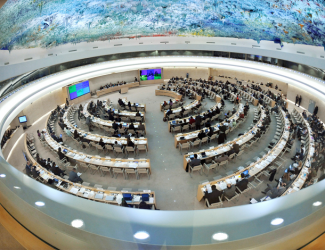
A general view of participants at the 16th session of the Human Rights Council in Geneva, Switzerland.

Human Rights Council (HRC)

The Human Rights Council (HRC) is the key intergovernmental body within the United Nations system responsible for the promotion and protection of all human rights around the globe. It holds three regular sessions a year: in March, June and September. The Office of the UN High Commissioner for Human Rights (OHCHR) is the secretariat for the HRC.

The HRC works by:

  • Debating and passing resolutions on global human rights issues and human rights situations in particular countries

  • Examining complaints from victims of human rights violations or activist organizations on behalf of victims of human rights violations

  • Appointing independent experts (known as “Special Procedures”) to review human rights violations in specific countries and examine and further global human rights issues

  • Engaging in discussions with experts and governments on human rights issues

  • Assessing the human rights records of all UN Member States every four and a half years through the Universal Periodic Review

Learn more about the HRC


AWID works with feminist, progressive and human rights partners to share key knowledge, convene civil society dialogues and events, and influence negotiations and outcomes of the session.

With our partners, our work will:

◾️ Monitor, track and analyze anti-rights actors, discourses and strategies and their impact on resolutions

◾️ Raise awareness of the findings of the 2017 and 2021 OURs Trends Reports.

◾️Support the work of feminist UN experts in the face of backlash and pressure

◾️Advocate for state accountability
 
◾️ Work with feminist movements and civil society organizations to advance rights related to gender and sexuality.
 

Related Content

التعبير عن الرغبة وغيرها من الممارسات السياسيّة الأيديولوجيّة المجسَّدة | Title Snippet AR

التعبير عن الرغبة وغيرها من الممارسات السياسيّة الأيديولوجيّة المجسَّدة

مع منال التميمي وليديوي راسيكوالا ولويز ماليرب حقوق ملكيّة المدوّنة الصوتية: زهور محمود

Ursula K Le Guin

Ursula was an American novelist who worked mainly in the genres of fantasy and science fiction.

She found fame with The Left Hand Of Darkness, which imagines a future society where people are ambisexual – they have no fixed sex. It explores the effects of gender and sex in society, and was one of the first major feminist science fiction books. Ursula was inspiring in her subversive and original writing, and also for the themes of feminism and freedom she held so dearly.

In a 1983 address at Mills College in California, she told graduates: “Why should a free woman with a college education either fight Macho-man or serve him? Why should she live her life on his terms? I hope you live without the need to dominate, and without the need to be dominated.”


Ursula K Le Guin, USA

Faye Macheke

Biography

Faye est une féministe panafricaine passionnée, engagée dans les mouvements pour les droits des femmes, la justice raciale, les droits des migrant·e·s et des travailleur·euse·s, et la justice environnementale. Son activisme s'appuie sur l'héritage de la lutte contre l'apartheid en Afrique du Sud et de ses suites au Zimbabwe.

En 2019, Faye rejoint l'AWID en tant que Directrice des Finances, des Opérations et du Développement. Elle s’est efforcée de garantir que l’AWID respecte les principes et les valeurs féministes dans toutes ses opérations. Elle y apporte plus de 20 années d’expérience en leadership féministe, en stratégie et autres aspects du développement organisationnel et financier.

Faye est membre engagée du conseil d'administration de Urgent Action Fund-Africa et d'autres organisations de défense des droits des femmes. Auparavant, elle a occupé des postes de responsable des finances et des opérations chez Pediatric Adolescent Treatment for Africa et JASS - Just Associates Inc. en Afrique australe. Elle a également occupé des postes de direction chez International Computer Driving Licence (ICDL) en Afrique centrale et australe. Elle est titulaire d'une licence en sciences comptables de l'Université d'Afrique du Sud ainsi que membre du Southern African Institute for Business Accountants.

Position
Codirectrice Exécutive
Add to stories
Off

Quelle est votre définition du financement extérieur?

Le financement extérieur inclut les subventions et autres formes de financement de la part de fondations philanthropiques, de gouvernements, de financeurs bilatéraux, multilatéraux ou d’entreprise et de donateur·rices individuel·les, qu’elles et ils soient de votre pays ou de l’étranger. Il exclut les ressources que les groupes, organisations et/ou mouvements génèrent de manière autonome (ressource en anglais), telles que les cotisations d’adhésion, contributions volontaires du personnel, de membres et/ou de soutiens, les collectes de fonds communautaires, les locations de salles et ventes de services. Les définitions des différents types de financement, ainsi que de courtes descriptions des différents bailleurs de fonds, sont incluses dans l’enquête pour une meilleure compréhension.

Forum 2024 - FAQ - Other Questions EN

Other Questions

Ester Lopes | Snippet FR

Ester Lopes Portrait

Ester Lopes est une danseuse et une écrivaine dont les recherches portent sur le corps, le genre, la race et les rapports de classe. Elle est professeure de Pilates et enseigne l’art. Ester est diplômée en théâtre contemporain – processus créatifs (à la FAINC) et en danse et conscience du corps (à l’USCS). Parmi ses spécialisations musicales figurent le chant populaire et les percussions. Elle a suivi une formation à Novos Brincantes avec Flaira Ferro, Mateus Prado et Antonio Meira à l’Institut Brincante en 2015 et 2016.

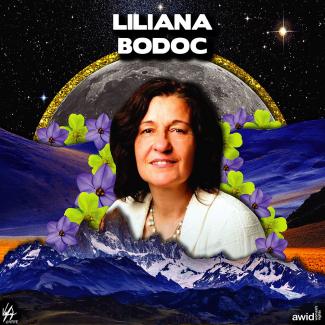
Liliana Bodoc

Liliana fue una maestra argentina, una tejedora y una escritora muy reconocida.

Su trilogía La saga de los confines recibió varios premios y es única en el género fantástico por su uso y reimaginación de la mitología de los pueblos indígenas de América del Sur.

El compromiso de Liliana con el feminismo se expresaba en las diversas, ricas y fuertes voces de mujeres en su escritura y especialmente en su extensa obra para lectorxs jóvenes. También tomó posición públicamente en favor del aborto, la justicia económica y la equidad de género.


Liliana Bodoc, Argentina

Elina Margarita Castillo Jiménez

Biography

Elina is a young afro-Dominican intersectional feminist and human rights lawyer, committed to use her voice and skills to build a more just, empathic and inclusive world.  She started Law school at 16, convinced it would give her the tools to understand and promote social justice. After a J.D. in the Dominican Republic, she pursued an LL.M. in Public International Law and Human Rights in the UK as a Chevening Scholar. She was the only Latinx-Caribbean woman in her class, graduating with honours.

Elina has worked at the intersection of human rights, gender, migration and policy, from government, grassroots collectives and international organizations. She helped litigate cases on gender-based violence before the Inter-American Court of Human Rights. As a member of the Youth Advisory Panel of UNFPA, she contributed to strengthening sexual and reproductive rights in the Dominican Republic. She co-led Amnesty International’s first campaign on sex workers’ rights in the Americas, developing strong partnerships with sex-worker led organizations and using Amnesty’s position to amplify women human rights defenders and sex workers’ voices.

Elina is part of Foro Feminista Magaly Pineda and the Global Shapers Community. She speaks Spanish, French and English. Thanks to her diverse background, Elina brings strong governance and strategic planning skills, substantive expertise on the United Nations and regional human rights mechanisms and her bold determination to keep AWID as an inclusive organization for all women, especially young and Caribbean feminists. With these offerings, joins a global sisterhood of feminist badasses, where she can keep nurturing her feminist leadership and never again feel alone in her path. 

Position
Co-Treasurer
Add to stories
Off

Is the WITM survey accessible for people with disabilities?

Yes, the survey is accessible to people with a diverse range of hearing, movement, sight, and cognitive abilities.

Presenté una propuesta para el Foro anterior. ¿Es necesario que Ia presente nuevamente?

Sí, por favor. El mundo ha cambiado desde 2021, y te invitamos a proponer una actividad que refleje tus realidades y prioridades actuales.

Disintegration | Small Snippet ES

Desintegración

 El miércoles llega una nota con una dirección en el reverso.

Leer más

Anna Campbell (şehid Hêlîn Qerecox)

Anna a grandi à Lewes, dans le Sussex (Royaume-Uni). Après avoir décidé de ne pas poursuivre sa licence d’anglais à l'Université de Sheffield, elle a déménagé à Bristol et est devenue plombière.

Elle a passé une grande partie de son temps à défendre les personnes marginalisées et défavorisées, à assister à des rassemblements antifascistes et à offrir son soutien aux femmes de la Dale Farm lorsqu'elles furent menacées d'expulsion. Végétalienne et amie des animaux, elle a participé à des missions de sabotage de chasses et son nom est honoré sur le monument commémoratif « Arbre de vie » de l’organisation PETA. Anna s'est rendue à Rojava en mai 2017 pour lutter en faveur du renforcement du pouvoir des femmes, de la pleine représentation de toutes les ethnies et de la protection de l'environnement.

Anna est décédée le 15 mars 2018, après avoir été atteinte par une frappe aérienne turque dans la ville d'Afrin, dans le nord de la Syrie. Anna se battait auprès des forces de protection des femmes (YPJ) quand elle a été tuée.


Anna Campbell (şehid Hêlîn Qerecox), UK

Patience Chabururuka

Biography

Patience es profesional global en recursos humanos y ha acumulado más de 10 años de experiencia en la gestión de recursos humanos (RRHH) en el sector sin fines de lucro. Anteriormente, trabajó en Mercy Corps como Oficial Global de Recursos Humanos para África, donde brindaba apoyo en todo lo concerniente al ciclo de vida del personal para personas expatriadas en la región de África oriental y meridional, y brindaba orientación técnica en recursos humanos a les encargades de recursos humanos en las oficinas nacionales de la región africana. Antes de sumarse al equipo global de personal, se desempeñaba como Punto Focal Nacional de Recursos Humanos y Salvaguardia, formó parte del equipo de gestión superior encargado de dirigir todos los asuntos de recursos humanos y salvaguardia. Antes de Mercy Corps, dirigió el Departamento de Recursos Humanos y Operaciones de SNV Netherlands Development Organization e integró el equipo de gestión nacional. Asimismo, posee experiencia de consultoría en Recursos Humanos que adquirió mientras estudiaba para su licenciatura en Gestión de Recursos Humanos que terminó con honores. Es una apasionada de la gestión de recursos humanos, le encanta trabajar con la gente y tiene al bienestar y la salvaguardia como sus valores fundamentales, los que aplica en su vida profesional. Por su pasión por los deportes, también se puede encontrar a Patience en un estadio de baloncesto, de tenis o de fútbol.

Position
Coordinadora de Recursos Humanos
Add to stories
Off

¿Cuánto tiempo toma responder la encuesta?

El tiempo estimado para responder la encuesta es de 30 minutos.

Forum 2024 - FAQ - General Information - Thai

ข้อมูลทั่วไป

Hospital | Content Snippet EN

“Now might be a good time to rethink what a revolution can look like. Perhaps it doesn’t look like a march of angry, abled bodies in the streets. Perhaps it looks something more like the world standing still because all the bodies in it are exhausted—because care has to be prioritized before it’s too late.” 
- Johanna Hedva (https://getwellsoon.labr.io/)

Hospitals are institutions, living sites of capitalism, and what gets played out when somebody is supposed to be resting is a microcosm of the larger system itself. 

Institutions are set out to separate us from our care systems – we find ourselves isolated in structures that are rigidly hierarchical, and it often feels as if care is something done to us rather than given/taken as part of a conversation. Institutional care, because of its integration into capitalist demand, is silo-ed: one person is treating your leg and only your leg, another is treating your blood pressure, etc. 

Photographer Mariam Mekiwi had to have surgery last month and documented the process. Her portraits of sanitized environments – neon white lights, rows after rows of repetitive structures – in a washed-out color palette reflect a place that was drained of life and movement. This was one of the ways Mariam kept her own spirit alive. It was a form of protest from within the confines of an institution she had to engage with.

The photos form a portrait of something incredibly vulnerable, because watching someone live through their own body’s breakdown is always a sacred reminder of our own fragility. It is also a reminder of the fragility of these care systems, which can be denied to us for a variety of reasons – from not having money to not being in a body that’s considered valuable enough, one that’s maybe too feminine, too queer or too brown.  

Care experienced as disembodied and solitary, that is subject to revocation at any moment, doesn’t help us thrive. And it is very different from how human beings actually behave when they take care of each other. How different would our world look like if we committed to dismantling the current capitalist structures around our health? What would it look like if we radically reimagined it?
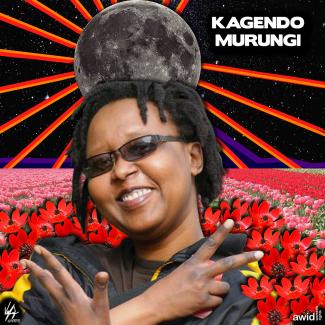
Kagendo Murungi

Kagendo is remembered fondly by family and friends as a fierce African feminist activist, artist, and filmmaker.

She dedicated over 20 years to advocate for the rights and dignity of African LGBTIQ and gender non conforming people.

Kagendo’s colleagues remember her as someone with a jovial personality, fierce conviction, and love for life. Kagendo died due to natural causes at her home in Harlem on December 27th, 2017.

On Kagendo’s passing Kenyan writer and activist Shailja Patel noted “Kagendo's lifelong commitment to connecting the dots between all oppressions, showing how colonialism fostered homophobia on the African continent, making Kenya a country where queer Kenyans and free women could live and thrive.”


Kagendo Murungi, Kenya