Left
Half
Left

Analyses Spéciales

L´AWID est une organisation féministe mondiale qui consacre ses efforts à la justice de genre, au développement durable et aux droits humains des femmes

La mémoire comme forme de résistance : un hommage

L’hommage se présente sous forme d’une exposition de portraits d’activistes du monde entier qui ne sont plus parmi nous qui ont lutté pour les droits des femmes et la justice sociale. 


En 2020, nous adoptons une démarche légèrement différente 

Cette année, tout en continuant à convoquer la mémoire de celleux qui ne sont plus parmi nous, nous souhaitons célébrer leur héritage et souligner les manières par lesquelles leur travail continue à avoir un impact sur nos réalités vécues aujourd’hui.

49 nouveaux portraits de féministes et de défenseur·e·s viennent compléter la gallerie. Bien que de nombreuses des personnes que nous honorons dans cet hommage sont décédé·e·s du fait de leur âge ou de la maladie, beaucoup trop d’entre iels ont été tué·e·s à cause de leur travail et de qui iels étaient.

Les histoires des activistes à l'honneur dans cet Hommage font vivre leur héritage et continuent d'inspirer le travail et l’action de nos mouvements.

Visiter notre exposition virtuelle

Les portraits de l'édition 2020 ont été illustrés par Louisa Bertman, artiste et animatrice qui a reçu plusieurs prix.

L’AWID tient à remercier nos membres, les familles, les organisations et les partenaires qui ont contribué à cette commémoration. Nous nous engageons auprès d’elleux à poursuivre le travail remarquable de ces féministes et défenseur·e·s et nous ne ménagerons aucun effort pour que justice soit faite dans les cas qui demeurent impunis.

« Ils ont essayé de nous enterrer. Ils ne savaient pas que nous étions des graines » - Proverbe mexicain

L'Hommage a été inauguré en 2012

Le premier hommage aux défenseur-e-s des droits humains a pris la forme d’une exposition de portraits et de biographies de féministes et d’activistes disparu·e·s lors du 12e Forum international de l’AWID en Turquie. Il se présente maintenant comme une gallerie en ligne, mise à jour chaque année.

Depuis, 467 féministes et défenseur-e-s des droits humains ont été mis·es à l'honneur.

Visiter notre exposition virtuelle

Contenu lié

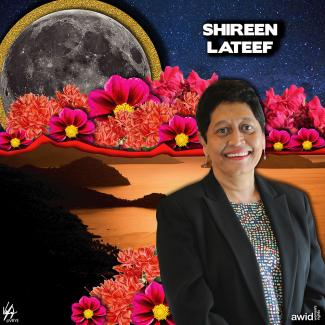
Shireen Lateef

Figure inspirante pour de nombreux-ses féministes aux Fidji, Shireen était une alliée de poids du mouvement des femmes. Elle a plaidé sans relâche pour l'égalité de genre aux niveaux local et régional.

Ayant débuté sa carrière en tant que spécialiste de l’égalité de genre à la Banque asiatique de développement, elle a apporté des changements radicaux en matière d’égalité de genre aux politiques de l’institution. Sa recherche, intitulée « La règle des Danda : la violence domestique chez les Indo-Fidjiens », est l'une des premières recherches sur la violence domestique, le mariage et les femmes aux Fidji. Ce travail précurseur a servi de catalyseur pour la militance féministe dans ce domaine.

L’héritage de Shireen lui survit et beaucoup se souviennent de son influence, de son engagement et de son soutien au mouvement des femmes aux Fidji et dans le Pacifique.


Shireen Lateef, Fiji

هل على مجموعتنا، منظمتنا أو حركتنا تعبئة الاستطلاع مع أننا لم نحشد أو نأخذ تمويلاً من ممولين/ات خارجيين/ات؟

نعم! نلاحظ ونقدّر الأسباب المختلفة لعدم تلق الحركات النسوية التمويل الخارجي، حيث من الممكن أن تكون غير مؤهلة لتقديم الطلبات للتمويل و\ أو تلقّي المال من خارج البلاد، أو الاعتماد على المصادر التي يتم إنتاجها بشكل مستقل كاستراتيجية سياسية. نريد أن نسمع منكم/ن بعيدا عن تجربتكم/ن مع التمويل الخارجي.

Key impacts on the international human rights system

Anti-rights actors have had a substantive impact on our human rights framework and the progressive interpretation of human rights standards, especially rights related to gender and sexuality.

When it comes to the impact of conservative actors in international policy spaces, the overall picture today is of stasis and regressions.


We have witnessed the watering down of existing agreements and commitment; deadlock in negotiations; sustained undermining of UN agencies, treaty review bodies and Special Procedures; and success in pushing through regressive language in international human rights documents.

Commission on the Status of Women (CSW)

The CSW, held annually in March, has long been one of the most contested sites in the UN system. In March 2015, conservative efforts set the tone before events or negotiations even began; the outcome document of the Commission was a weak Declaration negotiated before any women’s rights activists even arrived on the ground.

At 2016’s CSW, the new Youth Caucus was infiltrated by large numbers of vocal anti-abortion and anti-SRHR actors, who shouted down progressive youth organizations. Again, intensive negotiations resulted in a lacklustre text, which included regressive language on ‘the family.’

Precisely when addressing women’s human rights is of urgent importance, the CSW has been rendered a depoliticized and weakened space. Using it to advance rights has become harder and harder since progressives’ energy is taken up trying to hold the ground against conservative backlash.

Human Rights Council (HRC)

As the intergovernmental body responsible for the promotion and protection of human rights around the globe, the HRC is a key entry point for conservative actors. In recent years, this mechanism has been the scene for a number of damaging anti-human rights moves.

In conversation with other anti-rights actors, one strategy of conservative states, and blocs of states, is to aggressively negotiate out positive language and to introduce hostile amendments to resolutions, most often resolutions focusing on rights related to gender and sexuality.

To take one example, during the June 2016 session of the HRC, opposition was mounted towards a resolution on discrimination against women by the member states of the Organization of Islamic Cooperation (OIC) and allies. During contentious negotiations, multiple provisions were removed, including women’s and girls’ right to have control over their sexuality, sexual and reproductive health, and reproductive rights; and the need to repeal laws which perpetuate the patriarchal oppression of women and girls in families, and those criminalizing adultery or pardoning marital rape.

The HRC has also been the site of pernicious conservative initiatives to co-opt human rights norms and enact conservative “human rights” language, such as that of the Russia-led “traditional values” resolutions, and more recently the “Protection of the Family” agenda.

Human Rights Committee

In 2015, moving their sights to another front, a number of religious right organizations began to target the Human Rights Committee, the treaty monitoring body for the International Covenant on Civil and Political Rights (ICCPR), a pivotal human rights instrument.

Anti-human rights groups mobilized in hopes of cementing their anti-abortion rhetoric into the treaty.

When the Committee announced it was drafting a new authoritative interpretation of the right to life, over 30 conservative non-state actors sent in written submissions, advocating their misleading discourse on ‘right to life’ - that life begins at conception and that abortion is a violation of the right - be incorporated in the Committee’s interpretation of article 6.

Conservative groups targeting the Human Rights Committee was a shift considering that historically anti-human rights actors have repeatedly attempted to undermine and invalidate the essential work of the treaty monitoring bodies, including the Human Rights Committee.

SDG negotiations and Agenda 2030

Anti-human rights actors were involved in lobbying towards the development of the new Sustainable Development Goals (SDGs) in 2015, focusing again on rights relating to gender and sexuality. These efforts had limited traction in their attempts to embed regressive language in Agenda 2030.

However, after successfully pushing back against progressive language in the final text, conservative actors then pivoted to another strategy. In an attempt to evade state accountability and undermine the universality of rights, several states have repeatedly made reservations to the Goals.

On behalf of the African Group, Senegal claimed that African states would only “implement the goals in line with the cultural and religious values of its countries.”

The Holy See also made a number of reservations, stating it was “confident that the related pledge ‘no one will be left behind’ would be read” as meaning “the right to life of the person, from conception until natural death.”

Saudi Arabia went one step further, declaring that the country would not follow any international rules relating to the SDGs that reference sexual orientation or gender identity, describing them as running “counter to Islamic law.”

General Assembly (GA)

Anti-rights actors have made increasing headway at the UN General Assembly (GA).  Most recently, during the 71st session in 2016, the GA was the scene of feverish anti-rights organizing in opposition to the new mandate created by the Human Rights Council resolution on sexual orientation and gender identity in June 2016: the Independent Expert on SOGI. Four separate attempts were made to undercut the mandate in GA spaces.

One approach was to introduce a hostile resolution at the Third Committee[1], led by the African Group, which in essence aimed to indefinitely defer the new mandate. While this approach was not successful, such an attempt in the GA to retroactively block the creation of a mandate brought forward by the Human Rights Council represented a new and troubling tactic - anti-right actors are now working to directly undermine the HRC’s authority respective to the General Assembly.

Another approach targeted the Fifth Committee (responsible for administration and budgetary matters) as an entry point to attack the mandate. In an unprecedented move a number of States attempted (again, unsuccessfully) to block the funding of UN human rights experts, including the new IE on SOGI[2],.

While these multiple efforts were unsuccessful in blocking the creation and continuation of the new mandate, the significant support they received, the novel strategizing employed, and the strong alliances built along regional lines through negotiations point to difficulties ahead.


[1] The Third Committee of the GA deals with agenda items relating to a range of social, humanitarian affairs, and human rights issues.  Each year it discusses and issues resolutions on issues including the advancement of women, the protection of children, family, and youth.

[2] While UN Special Procedures experts (i.e. Special Rapporteurs, Working Group members and Independent Experts) work pro bono, some funds are generally allocated to facilitate country visits on the invitation of the national government, and support staff.


Other Chapters

Read the full report

Snippet FEA Decent Pay (FR)

Illustration d'une main à la peau blanche tenant de l'argent rose sur un fond turquoise.

DES SALAIRES DÉCENTS

Reason to join 1

Faites partie d’une organisation et d’une communauté internationales, associatives et féministes. Nos membres sont établi·e·s dans toutes les régions du monde; iels apprennent les un·e·s des autres et se soutiennent mutuellement dans un réseau mondial fondé sur la solidarité.

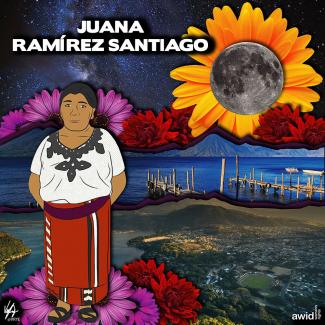
Juana Ramírez Santiago

Juana was one of the founders and current Board Member of Red de Mujeres Ixiles de Nebaj, an Indigenous women’s rights organization that is a member of the Mesoamerican Initiative of WHRDs (IM-Defensoras).

She was also a midwife and a mother of 7 children. Juana had received death threats that were reported to the Prosecutor’s office. Juana is the third Indigenous WHRD murdered in the area during 2018. The Guatemala Ombudsman reports that a total of 20 HRDs were killed in the country this year. 

Juana Ramírez Santiago was shot dead by unidentified attackers while crossing a bridge in Nebak, Quiché, Guatemala. Investigations to identify the perpetrators are ongoing.


Juana Ramírez Santiago, Guatemala

Моего языка нет в списке и мне сложно заполнить опрос – что мне делать?

AWID стремится к языковой справедливости, и мы сожалеем, что на данный момент проведение опроса на большем количестве языков не представляется возможным. Если вам нужна помощь в переводе или вы хотите заполнить анкету на любом другом языке, пожалуйста, свяжитесь с нами по адресу witm@awid.org

Sala de prensa

AWID en los medios

Compilación de noticias sobre la organización y/o el trabajo de AWID


Notas de prensa

Notas de prensa, dosieres y kits


Kits de social media

Contacto para medios

Email de contacto

+1 416 594 3773

Snippet FEA Map of Spain Union Otras (EN)

Mustard background with a pink map of Spain and a yellow pin of the location of Sindicato Otras;

Solidarity: membership why page

Solidarity 

We take a position in solidarity with each other and diverse struggles for justice and freedoms. We strive to mobilize and strengthen collective action and practice meaningful ways of working with each other.

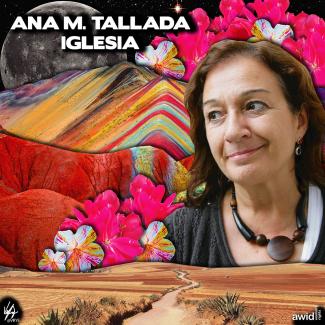
Ana M. Tallada Iglesia

Ana fue una firme defensora de los derechos de las mujeres y trabajó con una amplia diversidad de mujeres, desde aquellas que están redes de base hasta las que son parte del sector privado.

Creía que había que tender puentes entre sectores. Ana fue integrante de la Red Nacional de Promoción de la Mujer (RNPM), y tuvo participación activa en el desarrollo de muchos programas sociales que abordan temas como la salud y los derechos sexuales y reproductivos.


Ana M. Tallada Iglesia, Peru

O nosso grupo não recebeu qualquer financiamento nos três anos entre 2021 e 2023. Devemos preencher o questionário mesmo assim?

Sim, ainda queremos a sua resposta, independentemente de terem recebido financiamento em três, dois, um, ou qualquer um dos anos entre 2021 e 2023.

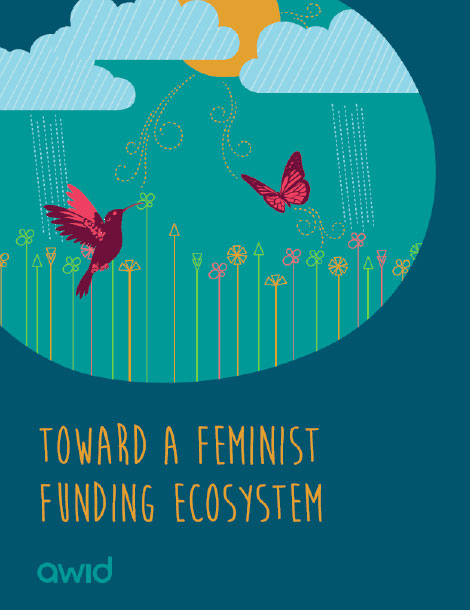
Here are your report and infographics: Toward a feminist funding ecosystem

Snippet FEA Union Otras Photo 1 (ES)

La foto vertical muestra un grupo de mujeres con carteles durante una manifestación con tres personas sentadas

Our values - Justice and systemic change

Justicia y cambio sistémico

Trabajamos por un mundo basado en la justicia social, ambiental y económica; y por la interdependencia, la solidaridad y el respeto. Trabajamos para desmantelar los sistemas de poder opresivo y contra todas sus manifestaciones, incluidos el patriarcado, los fundamentalismos, los militarismos, los fascismos y el poder corporativo que amenazan nuestras vidas y nuestro mundo. Queremos un mundo justo en el que los recursos y el poder sean compartidos en formas que permitan que todas las personas prosperen.

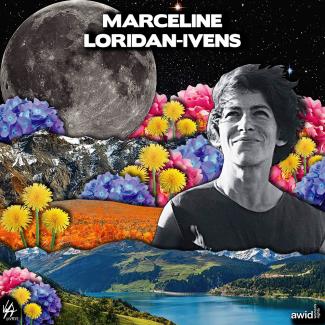
Marceline Loridan-Ivens

Née en 1928, Marceline était actrice, scénariste et réalisatrice.

En 2003, elle avait réalisé « La petite prairie aux bouleaux », mettant en vedette Anouk Aimée, ainsi que plusieurs autres documentaires. Survivante de l'holocauste, elle n'avait que quinze ans lorsque son père et elle furent arrêtés et envoyés dans des camps de concentration nazis. Les trois kilomètres qui la séparaient de son père à Auschwitz alors qu’elle-même était à Birkenau furent une distance insurmontable, décrite dans l’un de ses romans majeurs « Et tu n’es pas revenu ».

En parlant de son travail, elle a un jour déclaré: « Tout ce que je peux dire c’est que tout ce que je peux écrire, tout ce que je peux dévoiler, c’est à moi de le faire. »


Marceline Loridan-Ivens, France

لماذا تسألون عن اسم المجموعة، المنظمة و\ أو الحركة التي تعبئ الاستطلاع؟

نسأل عن هذه المعلومات كي نسهّل عملية المعالجة وكي نستطيع أن نتواصل مع مجموعتكم/ن في حالة لم تستطيعون تكملة الاستطلاع و\ أو في حالة كانت لديكم/ن شكوك أو أسئلة إضافية. يمكنكم/ن قراءة المزيد عن كيف نستعمل المعلومات التي نجمعها خلال عملنا هنا.